Briefing · August 15, 2026
Your Managers Are Your AI Strategy — Whether You Planned It That Way or Not
New data shows empathetic managers determine whether employees see AI as opportunity or threat — making manager readiness your most urgent infrastructure problem.
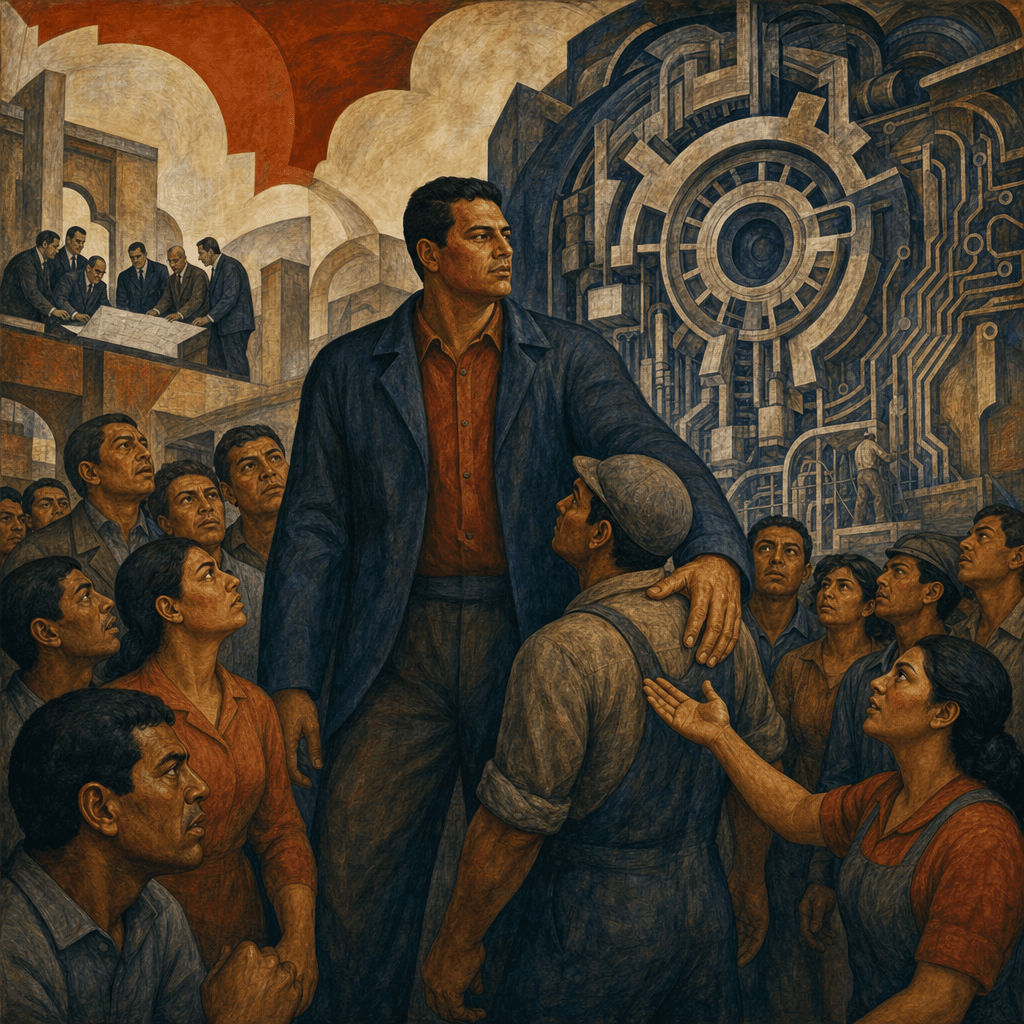
The conversation about AI adoption keeps landing in the wrong room. Chief information officers (CIOs) debate tooling. Chief technology officers (CTOs) debate architecture. Meanwhile, the variable that most predicts whether your workforce embraces or resists AI is sitting in a skip-level review you probably haven't scheduled: the quality of your middle managers.
According to a Businessolver report cited by HR Dive (2025-07-14), empathetic leadership lifted every AI-sentiment metric measured — including employee optimism about AI and employees' reported sense of control over their own work. In plain terms: workers whose managers demonstrate empathy are statistically more likely to view AI as an opportunity rather than a threat, regardless of the tools being deployed. The technology itself is almost beside the point. The management layer is the adoption layer.
Why does manager empathy predict AI sentiment?
Empathy in a management context is not a personality trait — it is an information-processing behavior. An empathetic manager actively seeks to understand how a change lands on their team, then adjusts communication and pacing accordingly. When AI enters a workplace, it arrives carrying ambiguity about job security, skill obsolescence, and status. A manager who can name those fears out loud, before employees do, converts a threat narrative into a problem-solving conversation. One who cannot — or will not — leaves that ambiguity to metastasize into resistance. The Businessolver findings suggest this dynamic is measurable and consistent, not anecdotal.
Which makes the parallel finding from a separate readiness report particularly damaging. A Careerminds report cited by HR Dive (2025-07-11) found "substantial gaps" in manager skills that are actively hurting organizational readiness — with senior partner Mark Saddic stating flatly that "the role of the manager has fundamentally changed." If empathy is the mechanism by which AI adoption succeeds, and manager capability is materially degraded, you do not have an AI problem. You have a management infrastructure problem that is expressing itself as an AI problem.
Are your employees already operating without trust in leadership?
There is a compounding dynamic worth naming. A Howdy survey reported by HR Dive (2025-07-14) found that more than half of employees believe company leadership lives "in a different world" — holding workers to standards that leadership itself does not follow. That baseline credibility deficit matters enormously when you are asking the same workforce to trust leadership's framing of AI as a net positive. An announcement that "AI will augment your role, not replace it" lands very differently when the person delivering it is perceived as exempt from the policies they enforce on others.
This is the environment in which most AI change-management programs are being launched. The readiness gap is not primarily about prompt training or workflow redesign — those are solvable with time and budget. The readiness gap is a trust gap, and trust is built or destroyed by individual managers in individual conversations, not by all-hands decks.
What the competency model is missing
Most organizations responding to AI are rewriting competency frameworks to include things like "AI fluency" or "comfort with ambiguity." Those additions are not wrong, but they are incomplete. The skill that Businessolver's data actually points to — the one that determines whether employees feel in control of their work during an AI transition — is relational, not technical. Empathy, translated into management behavior, is the infrastructure through which all other AI investments either flow or stall.
The practical implication is uncomfortable: your manager development budget is currently your most leveraged AI investment, not your software licensing spend. A recent HR Executive analysis (2025-07-14) reinforces this, noting that AI adoption research increasingly points to differentiated group experiences — meaning adoption is mediated by the relationships and norms in each team, not by enterprise-wide rollout strategy alone.
None of this diminishes the technical work. But if your AI adoption plan does not have a named owner for manager capability — someone whose job it is to ensure that frontline managers can hold the empathy conversations that turn ambiguity into agency — then your adoption plan is incomplete. The board conversation about AI ROI needs to start one layer lower than it usually does: with whether your managers can actually carry the weight you are placing on them.
When did you last assess whether your middle managers have the relational capacity to lead through this transition — not just the technical awareness to describe it?
Created with AI assistance. Editorial oversight: Juergen Ritzek. See our AI disclosure.