Briefing · June 17, 2026
Your Change Management Is Drowning Workers — And Your Managers Don't Know It
The front-line disconnect isn't a communication problem — it's a structural failure that AI pressure is now making catastrophically worse.
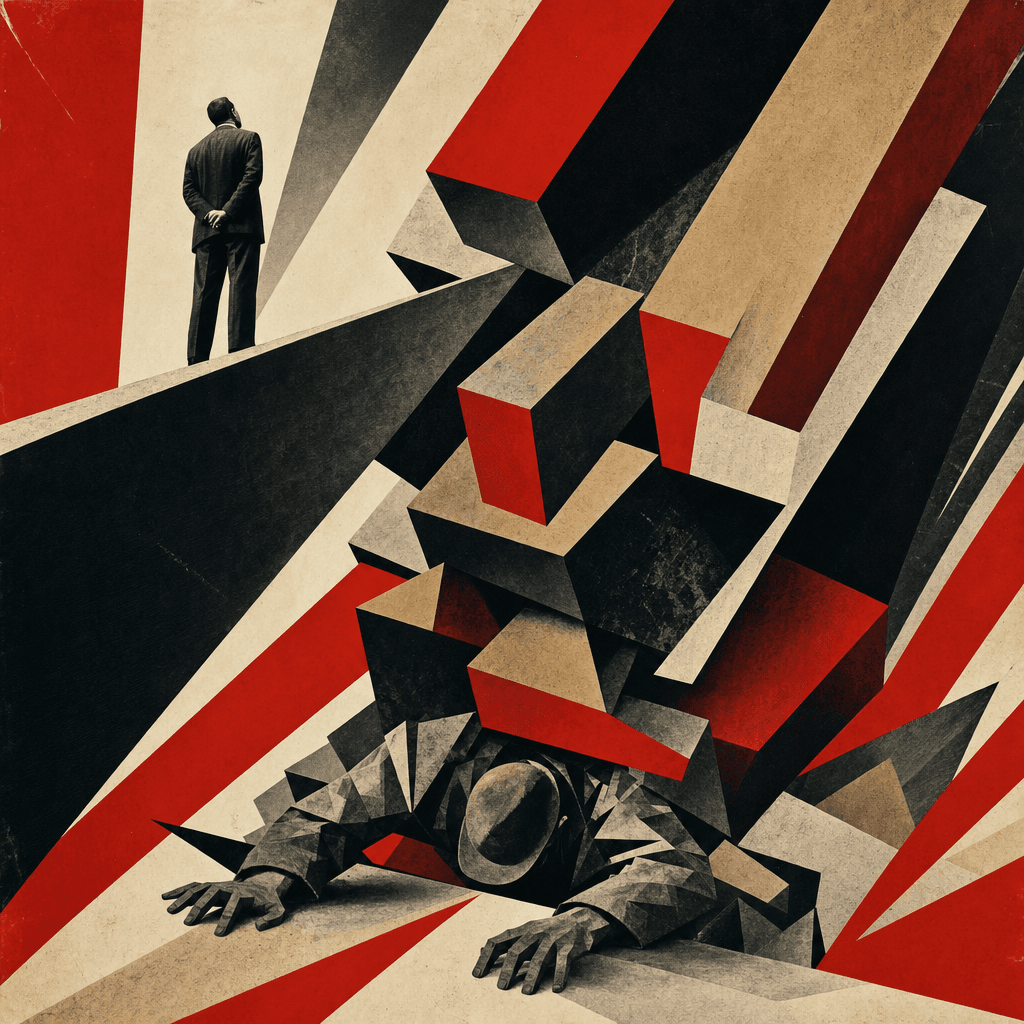
The assumption buried inside most transformation programs is that leadership knows what's happening at the shift level. It doesn't. And the gap is no longer a nuisance — it's a retention crisis with a price tag attached.
Dayforce's research (2025) found that nearly three-quarters of front-line workers have considered quitting because of shift-level problems that leadership either doesn't see or doesn't act on. That's not an engagement score rounding error — that's a majority of your operational workforce with one foot out the door, frustrated by problems that never make it into the executive deck. The question worth sitting with: if 73% of your front line is contemplating exit, what exactly are your managers reporting up?
Change Saturation Is a Real Physiological Problem, Not a Morale Metaphor
The instinct in most organizations is to treat worker resistance to change as a communication failure — send a better email, run a town hall, assign a champion. That framing is wrong, and it's expensive. MIT Sloan Management Review's case study on CareRx (2025) documented what happens when change velocity outstrips absorption capacity: in a span of 20 months, the Canadian pharmacy services company tripled its business through acquisitions, layering new processes, systems, and cultural norms before employees had digested the previous round. The result wasn't resistance — it was exhaustion. Workers weren't opposed to change; they were physiologically saturated by it.
The distinction matters strategically. If you're diagnosing saturation as resistance, you'll respond with more communication, which adds cognitive load and accelerates the problem. The lever isn't message volume — it's change sequencing and absorption intervals. How many concurrent transformations are you running right now, and when did you last audit whether your workforce has actually internalized the last one?
AI Pressure Is Compressing the Timeline and Managers Are Unequipped
Into this already-stressed environment, add AI-driven change. Headspace's chief people officer, speaking to HR Dive (2025), was direct: policies and benefits programs that extol the importance of mental health are being systematically undermined by managers who are ill-equipped to handle what AI-driven change is surfacing in their teams. The mental health need is intensifying precisely because the pace of AI-induced role disruption is outrunning the emotional and managerial infrastructure meant to absorb it.
This is the structural problem that boards rarely see framed clearly: the manager layer is the single most important variable in whether organizational change succeeds or fails, and it's also the layer receiving the least preparation for AI-era pressures. You can invest $50 million in a transformation program and watch it crater because mid-level managers don't have the language, bandwidth, or psychological safety to hold their teams through genuine uncertainty. At what point does your L&D investment in AI tools get matched by investment in the humans translating those tools to the front line?
The Values Gap Makes It Worse
There's a compounding factor that rarely appears in transformation post-mortems: worker cynicism about whether the organization means what it says. HR Dive's analysis of worker values research (2025) found that nearly half of employees say they have worked for companies that didn't live up to the principles they claimed to embrace. When you're asking workers to absorb significant disruption — new systems, new roles, AI-adjacent anxiety — trust is the load-bearing wall. If workers already believe the values are decorative, their tolerance for change-related hardship compresses dramatically.
This is why culture-washing in the middle of a transformation program isn't just ethically dubious — it's operationally self-defeating. Workers who've seen their employer's stated values fail to survive contact with a difficult decision will extend no goodwill during the next difficult quarter.
The Structural Implication
The organizations that will navigate this period without hemorrhaging front-line talent share one characteristic: they've built feedback architecture that makes the shift-level reality visible to the people with authority to act on it — and they've invested in manager capability before they needed it, not after the attrition numbers forced the question.
Most have not done this. Most are running transformations designed around technology deployment timelines, not human absorption curves, managed by a layer of people who were promoted for functional excellence and handed a mental health crisis they were never trained to hold. The saturation isn't coming — for many organizations, it's already here.
The real board-level question isn't whether AI will create or eliminate jobs. It's whether your management infrastructure can carry your workforce through the transition without breaking the trust that makes execution possible at all.
Created with AI assistance. Editorial oversight: Juergen Ritzek. See our AI disclosure.