Briefing · October 29, 2026
Who Gets Interrupted in Your Meetings Tells You Everything About Your Culture
Interruption patterns in meetings are a more honest culture audit than any engagement survey — here's what they reveal and why leaders must act.
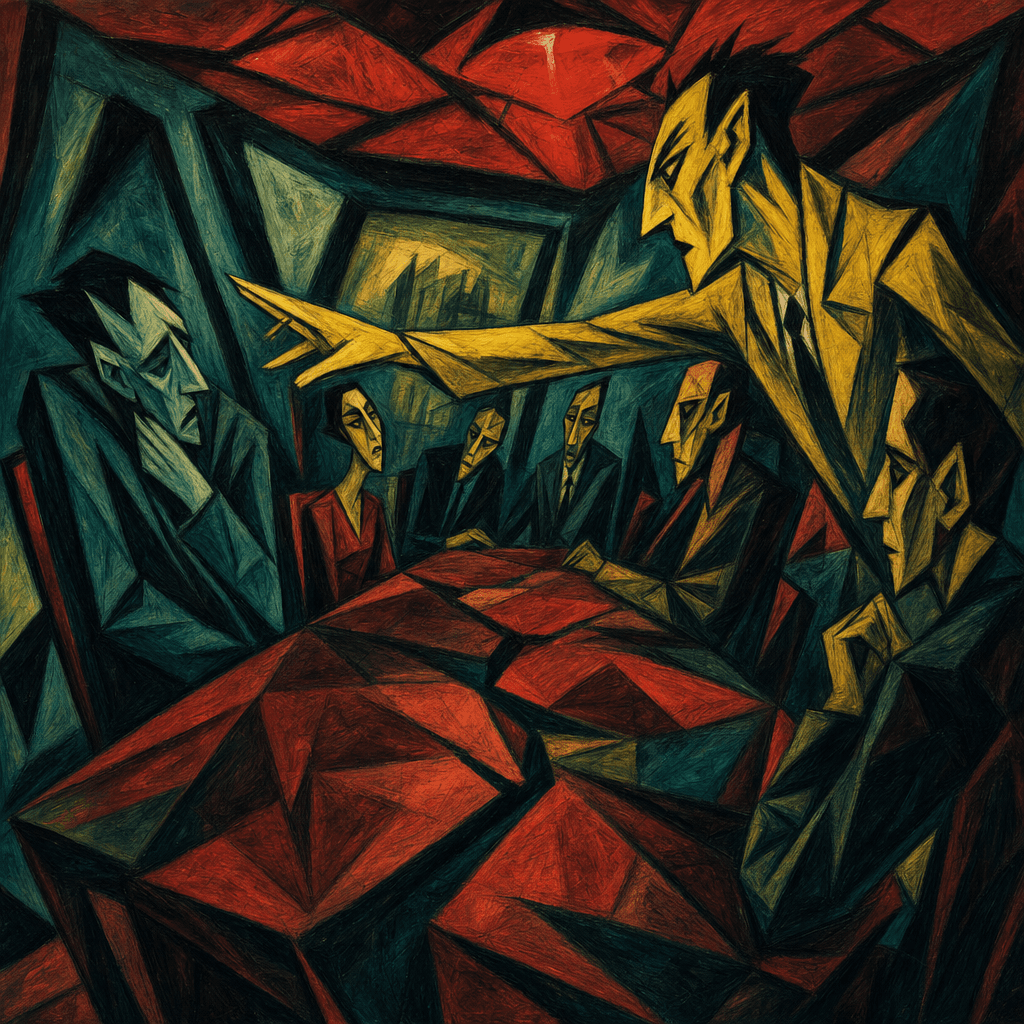
The most honest culture audit your organization will ever conduct isn't a survey — it happens every Tuesday at 10 a.m. in your standing leadership meeting. Specifically, it happens in the half-second between when someone begins a sentence and when someone else finishes it for them. According to MIT Sloan Management Review, employees watch exactly these moments to understand which voices carry real organizational weight — and whose ideas are quietly absorbed, redirected, or overridden.
The finding, documented in a recent MIT Sloan Management Review analysis, is this: interruption patterns in workplace meetings are one of the most reliable behavioral signals of organizational culture, because they reveal whose authority is tacitly endorsed by the group in real time, independent of any official org chart or stated values. An interruption is not a conversational accident — it is a micro-power event, and everyone in the room registers it as such.
Why do interruption patterns matter more than stated culture values?
Because stated values are aspirational; interruptions are behavioral. Organizations spend considerable resources codifying what they believe — mission statements, culture decks, manager training. Yet MIT Sloan Management Review argues that employees calibrate their actual understanding of organizational norms not from those documents but from observing who speaks without cost and who absorbs that cost for others. If a Chief Human Resources Officer (CHRO) articulates an inclusion commitment on Monday and a senior vice president talks over a junior analyst on Wednesday, the analyst's colleagues file the Wednesday data, not the Monday speech.
This matters operationally. When certain employees learn — through repeated social signaling — that their contributions will be co-opted or cut short, they do one of three things: they stop volunteering ideas in group settings, they route their best thinking through informal networks around those meetings, or they begin looking for the exit. None of these outcomes are visible in quarterly engagement scores until significant organizational damage has already occurred. If your meeting culture systematically silences particular cohorts, you are not running culture assessments — you are running cover.
What does the research say about who gets interrupted and why?
The MIT Sloan Management Review research makes clear that interruption is not randomly distributed across a group. It follows the contours of existing status hierarchies — seniority, gender, functional prestige — which means it actively compounds existing inequalities rather than simply reflecting them. Each meeting where a pattern goes unnamed becomes a rehearsal for the next one. The social norm calcifies.
This connects directly to a parallel body of evidence on what Stanford University research psychologist Jamil Zaki describes, via McKinsey & Company, as a deepening crisis of connection in workplaces. Zaki's argument is that AI adoption may be accelerating that disconnection — but the root of the problem is older and more structural. Meeting rooms that operate on implicit hierarchy are not neutral containers for collaboration; they are machines that reproduce the power distribution that already exists, regardless of whether an AI tool is in the loop.
The strategic implication for senior leaders is not to start policing interruptions with a referee's whistle. It is to recognize that your organization's real inclusion data is sitting in the behavioral record of your last 90 days of meetings — and that record is already being read by every person in those rooms, whether or not you are.
What should leaders actually do with this insight?
The first move is diagnostic, not prescriptive. Before your organization invests another dollar in culture programming, ask whether leaders can accurately identify, from memory, whose contributions in the last month's key meetings were completed versus whose were absorbed by someone else's voice. If that question produces silence or defensiveness, you have located the gap between your stated culture and your operational one.
Consider also what interruptions reveal about information flow. If the employees most likely to be interrupted are also closest to customers, to frontline operations, or to emerging technical risk, then the culture tax is not merely a fairness issue — it is a strategic intelligence failure. The ideas being crowded out may be precisely the ones your board conversation next quarter requires.
MIT Sloan Management Review frames interruptions as a window into culture, but they are more than that. They are a real-time measure of whose intelligence your organization has decided to budget for — and whose it has decided it can afford to waste.
Created with AI assistance. Editorial oversight: Juergen Ritzek. See our AI disclosure.