Briefing · November 21, 2026
The AI Resume Filter Is Rejecting Real Candidates — and Most Employers Know It
Nine in ten employers fear they've already screened out genuine applicants by mistaking AI-assisted resumes for fakes — a hiring crisis hiding in plain sight.
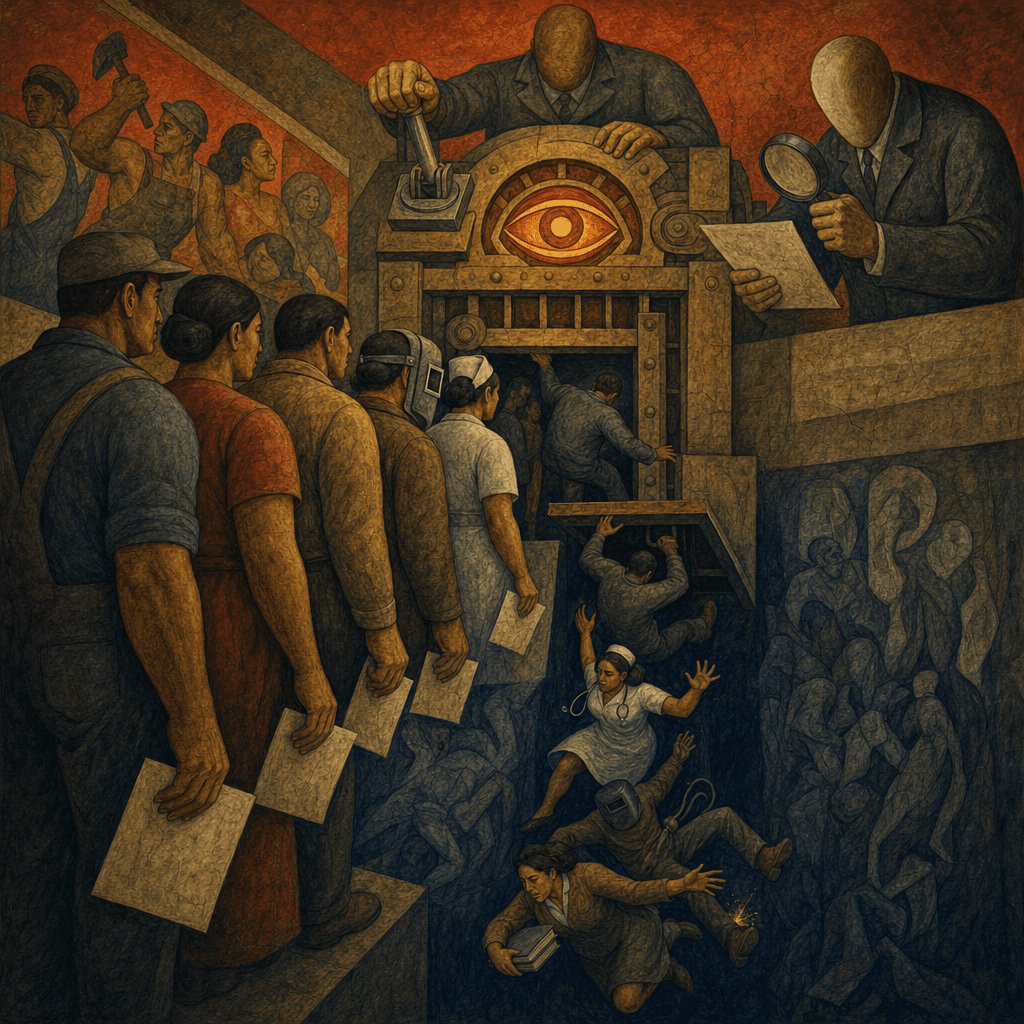
Hiring has always rewarded people who could present themselves well on paper. What's new is that the tool doing the presentation is the same tool doing the screening — and neither side trusts the other's output.
According to a new study covered by HR Dive, 9 in 10 employers now worry they have rejected a real applicant because they mistakenly believed a resume was fake or AI-generated. Read that again: nine in ten employers, as of mid-2025, fear their own screening process is producing false negatives at scale — discarding qualified human candidates because an algorithm or a recruiter flagged their materials as synthetic. That is not a signal buried in a footnote. That is the majority view among the people running your competitors' talent pipelines.
Why are employers rejecting real candidates at such high rates?
The mechanism here is straightforward, even if the consequences are not. Candidates use large language models (LLMs) — AI systems trained on vast text corpora to generate fluent, contextually appropriate language — to polish or draft application materials. The resulting prose is often cleaner, more keyword-dense, and more structurally consistent than what most humans produce unaided. AI detection tools, which attempt to identify statistically "machine-like" writing patterns, then flag these materials as potentially synthetic. The problem is that detection accuracy is notoriously unreliable: these tools generate false positives against human-written text that happens to be clear and well-organized, and they fail against AI-generated text that has been lightly edited. The result is a screening layer that punishes competence and rewards idiosyncrasy.
So employers are caught. They want to screen for authentic signal — genuine skill, genuine experience — but the tools they're using can't reliably distinguish between a candidate who used AI to sharpen their self-presentation and one who had AI fabricate credentials wholesale. The error rate is high enough that HR Dive's reporting suggests most hiring organizations already suspect they're making systematic mistakes. What they haven't done is quantify the downstream cost: positions that stayed open longer, roles that were filled by second-choice candidates, pipelines that narrowed quietly while no one audited the filter.
What does the 2027 labor market picture do to this problem?
The timing couldn't be worse. Indeed and Glassdoor's forecast, reported by HR Dive, projects significant labor market turbulence arriving by 2027, with higher turnover rates and a weakening leadership pipeline flagged as top concerns for talent leaders. If that forecast lands, employers will be competing harder for a narrower field of proven candidates — exactly the moment when a screening process that discards real applicants at high rates becomes an existential liability, not an operational nuisance.
There's a compounding dynamic worth naming. The same AI tools creating the false-positive problem in screening are increasingly embedded in the job search itself. Candidates who can't use AI fluently will produce materials that look weaker against those who can. Candidates who use AI heavily will be flagged as suspicious. This creates a skills paradox: the workforce capability most valued by employers — facility with AI tools — is simultaneously the trait most likely to get a candidate's application binned. If your screening process is systematically eliminating people who are competent AI users, you are selecting against the very capability you claim to need.
The broader concern isn't about any single bad hire or missed candidate. It's structural. When Indeed and Glassdoor's analysts point to leadership pipeline weakness as a 2027 risk, they are describing the cumulative effect of years of hiring decisions — including quiet filtering errors that never got audited. If 90% of employers are already uncertain their screening is working correctly, the pipeline problem may already be baked in.
The question that belongs in your next talent review isn't "how do we detect AI-generated resumes?" It's "what is our actual false-negative rate, and what has it cost us in the last 24 months?" Most organizations don't have that number. That absence is a governance failure, not a technology problem.
Screening tools are only as trustworthy as the assumptions embedded in them. Right now, the assumption is that AI-assisted self-presentation is a disqualifying signal. The evidence suggests it's closer to a universal norm. Continuing to treat it as the former, while most of your competitors quietly do the same, doesn't protect your talent pool — it just ensures the error is shared evenly enough that no one gets fired for it yet.
Created with AI assistance. Editorial oversight: Juergen Ritzek. See our AI disclosure.