Briefing · July 6, 2026
Tech Laid Off 83% More Workers in H1 2026 — and AI Is Doing the Explaining
Tech sector job cuts surged 83% year-over-year in H1 2026, but the real story is who's next and why "BYOAI" makes it worse.
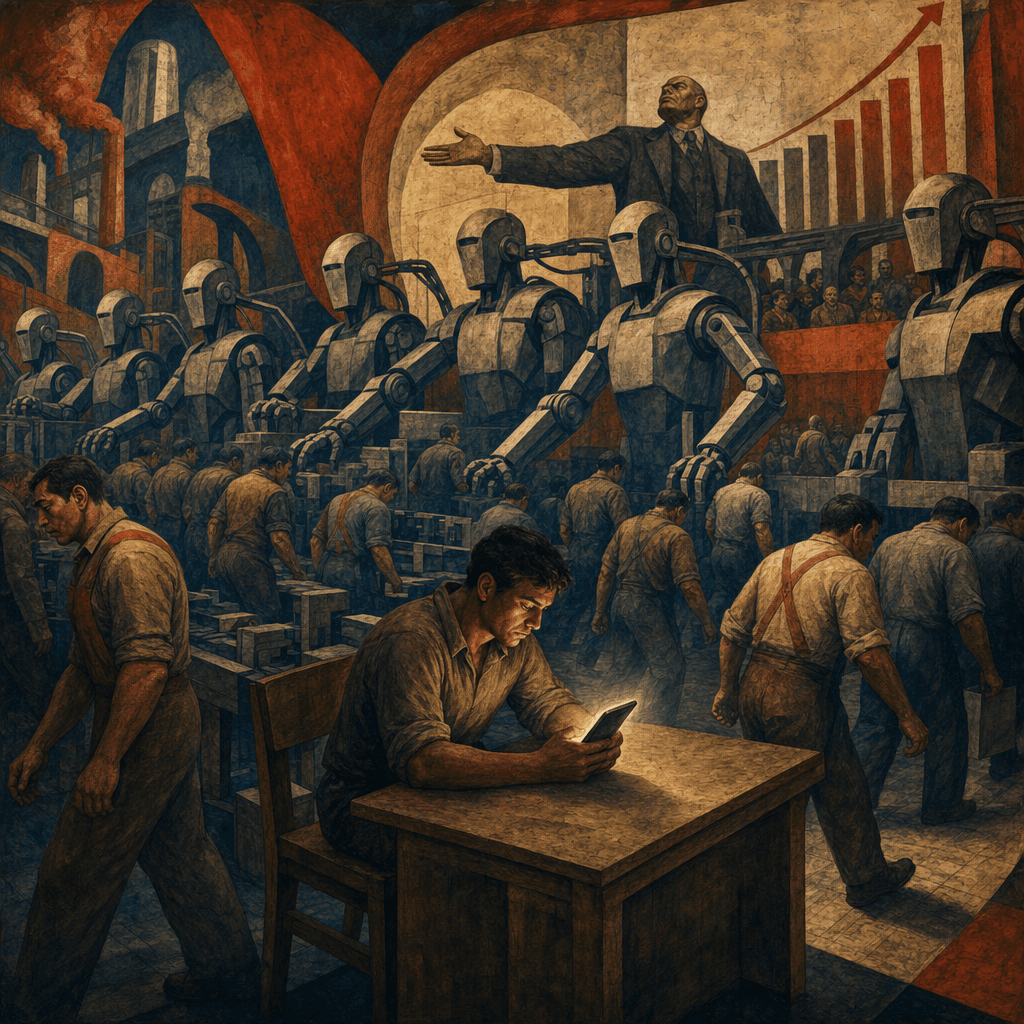
The narrative that AI creates more jobs than it destroys is getting harder to sustain. Tech sector layoffs jumped 83% year-over-year in the first half of 2026, according to Challenger, Gray & Christmas — and the sector now accounts for nearly a third of all U.S. job cuts in that period. That is not a rounding error. That is a structural signal dressed up as a quarterly anomaly.
The standard response from executives has been to point at productivity gains, redeployment pipelines, and reskilling investments. What's harder to point at: a workforce strategy that actually accounts for the velocity of this transition. If your organization is in adjacent sectors — financial services, healthcare, professional services — and you're watching tech absorb the first wave, the question isn't whether this reaches you. It's whether you'll recognize it when it does.
The "Bring Your Own AI" Accelerant
Here's the wrinkle that makes the layoff data more complicated, not less: workers are not waiting for their employers to hand them AI tools. HR Dive (2025) reports a rising "bring your own AI" trend in which employees are sourcing and deploying personal AI tools at work without formal oversight — creating accuracy risks, compliance exposure, and data governance gaps that most organizations are entirely unprepared to audit.
The irony is pointed. Companies are cutting headcount partly on the premise that AI tools will absorb the work. Meanwhile, employees are using unsanctioned AI to perform their jobs faster, often invisibly, which means productivity metrics may already be reflecting AI augmentation that leadership doesn't know is happening. You're making workforce reduction decisions on a productivity baseline you cannot fully see.
This is not a technology management problem. It's a measurement problem with serious strategic consequences. If you don't know what your people are actually using to get work done, you don't know what happens to output when you eliminate the headcount.
Slack Water and the Hidden Risk
The broader labor market context makes this moment more precarious, not less. Economists are describing the current U.S. jobs picture as "slack water" — stagnant, neither clearly deteriorating nor recovering, with June data showing continued weakness and limited upward momentum. The phrase is apt: slack water precedes a turn in the tide, and nobody agrees which direction it's about to run.
For HR leaders, the implication is asymmetric. If you cut aggressively into slack water and the tide turns negative, you will have destroyed institutional knowledge you cannot rebuild quickly. If you hold headcount through a correction, you carry costs you didn't need to. Neither path is clean, but the companies with the clearest picture of what their workforce actually produces — tool-assisted or not — will make less bad decisions than those working from historical cost-center logic.
Governance Is the Competitive Moat Nobody's Building
MIT Sloan Management Review's Summer 2026 research on scaling generative AI offers a structural frame that cuts through the noise. MIT Sloan Management Review (2026) found that organizations successfully expanding GenAI value are building what researchers call an "AI spine" — a coordinated cross-functional structure that draws on domain expertise and user-level innovation rather than centralizing AI decisions in IT or a standalone transformation office.
This matters in the context of BYOAI because it points to an organizational design answer. The problem isn't that employees are using AI tools you didn't sanction. The problem is that you have no mechanism to surface what's working, govern what's risky, and absorb employee innovation into sanctioned workflows. Companies that build that connective tissue now will have a governance advantage when regulators arrive — and they are arriving. The incoming U.S. Labor Secretary is expected to reshape AI enforcement priorities at the Department of Labor, which means the window for proactive self-governance is narrower than most compliance calendars currently reflect.
The 83% surge in tech layoffs is not the story. It's the leading indicator. The actual story is whether your organization can account for what AI is already doing inside your workforce, who's controlling those tools, and what your liability surface looks like when the first enforcement action lands in your sector. Headcount decisions made without that visibility aren't strategic — they're guesses made at scale.
What does your current AI usage data actually tell you about where productivity is coming from, and are you prepared to defend that answer to a regulator?
Created with AI assistance. Editorial oversight: Juergen Ritzek. See our AI disclosure.