Briefing · September 23, 2026
Pay Cynicism Is Spreading — And Your RTO Mandate Is Making It Worse
When employees don't trust how they're paid and face forced commutes, the math of employee confidence breaks down fast.
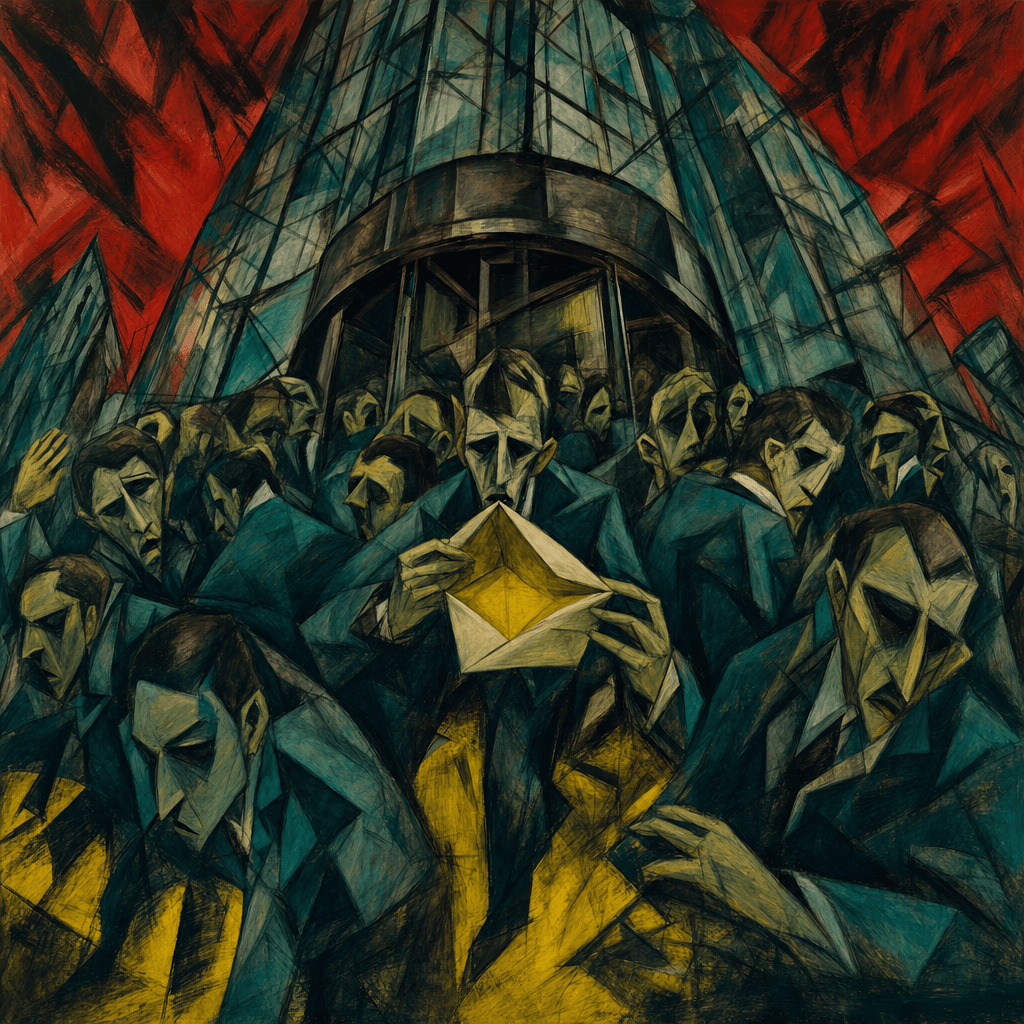
"Rampant pay cynicism" isn't a culture problem. It's a P&L problem hiding in your engagement scores.
A new Marsh report flagged by HR Dive (2025-07-22) finds that a depleted workforce paired with cynicism about pay creates what the firm calls "a precarious moment for employers." That sentence — a depleted workforce paired with cynicism about pay — is the core problem every chief human resources officer (CHRO) should be bringing to their next board meeting, because the two conditions are now arriving together, not sequentially. The Marsh global rewards leaders aren't describing a distant risk; they're describing the current state of the employment relationship in many mid-to-large organisations.
Why is pay cynicism so dangerous right now?
Pay cynicism is the employee belief that compensation decisions are arbitrary, opaque, or rigged in favour of insiders — regardless of whether any of that is technically true. It corrodes discretionary effort faster than a pay freeze does, because at least a freeze is explicable. Cynicism about the process is harder to argue with than cynicism about the number.
The danger compounds when return-to-office (RTO) mandates land on top of it. Thousands of Barclays staff are currently in open revolt against a three-day office mandate, pushing the bank to grant exemptions for employees with longer commutes and demanding one-off payments to cover increased worker costs, according to the Financial Times (2025-07-22). Barclays is not an outlier. It is the case study. When employees have already decided that pay decisions don't reflect their contributions, adding a commuting cost — even a modest one — reads as a deliberate extraction. The trust deficit turns a logistics question into a vote of no confidence.
So the question facing executives isn't simply whether to mandate office attendance. It's whether your pay communication is strong enough to survive the additional scrutiny that mandate will trigger.
Does the legal environment give employers cover to hold the line?
Not as much as some legal teams believe. In the United Kingdom (UK), the government is moving fast. Louise Haigh, the Transport Secretary, told the Trades Union Congress (TUC) that every request for flexibility "should be taken seriously" and that UK bosses must "sit down" with staff who have rejected work-from-home requests, according to the Financial Times (2025-07-21). Simultaneously, new UK legislation is bringing far more companies into contact with trade unions than at any point in recent memory — and many businesses are entirely unprepared, as the Financial Times (2025-07-23) reported this week.
The legal direction of travel in the UK creates a structural problem for any employer who treats RTO as a unilateral prerogative. When collective bargaining rights expand and flexibility requests carry quasi-procedural weight, the informal power organisations have used to mandate attendance quietly shifts back toward employees. Boards that assume the law is neutral on this question are operating on outdated advice.
The explainer: what "pay cynicism" actually measures
Pay cynicism is a psychological construct from organisational research, distinct from dissatisfaction. Dissatisfied employees think they are underpaid relative to market. Cynical employees think the system itself — how decisions get made, who benefits, how information is shared — is fundamentally untrustworthy. Dissatisfaction is addressable with data; cynicism requires rebuilt process credibility, which takes years. The Marsh report uses the term to describe a condition already present across workforce populations, not a risk on the horizon.
This matters because many executive teams conflate the two and respond to cynicism with the wrong tool: a pay review or a benchmarking exercise. Neither moves the needle if employees don't trust the methodology behind the numbers.
What the convergence actually demands
The Barclays revolt, the Marsh warning, and the UK's tightening regulatory frame are not three separate stories. They are one story: the implicit contract between employer and employee — "we'll pay you fairly and give you reasonable conditions" — is under stress at exactly the moment when organisations have less informal authority to enforce compliance.
At HR Dive (2025-07-22), data this week also showed that artificial intelligence (AI) is actually slowing down the hiring process for a significant share of employers — meaning the pipeline of replacement talent is not the release valve it once appeared to be.
That changes the calculus on how hard to push. If your workforce is already pay-cynical, your RTO policy is adding friction, your legal exposure is growing, and your hiring pipeline is slower than last year, the question isn't whether you need to rethink the mandate. The question is why you haven't yet.
Created with AI assistance. Editorial oversight: Juergen Ritzek. See our AI disclosure.