Briefing · July 29, 2026
Only 3% of Leaders Are AI-Ready — That Gap Is Now a Structural Risk
AI adoption is outrunning leadership capacity, and the skills eroding fastest are the ones executives need most.
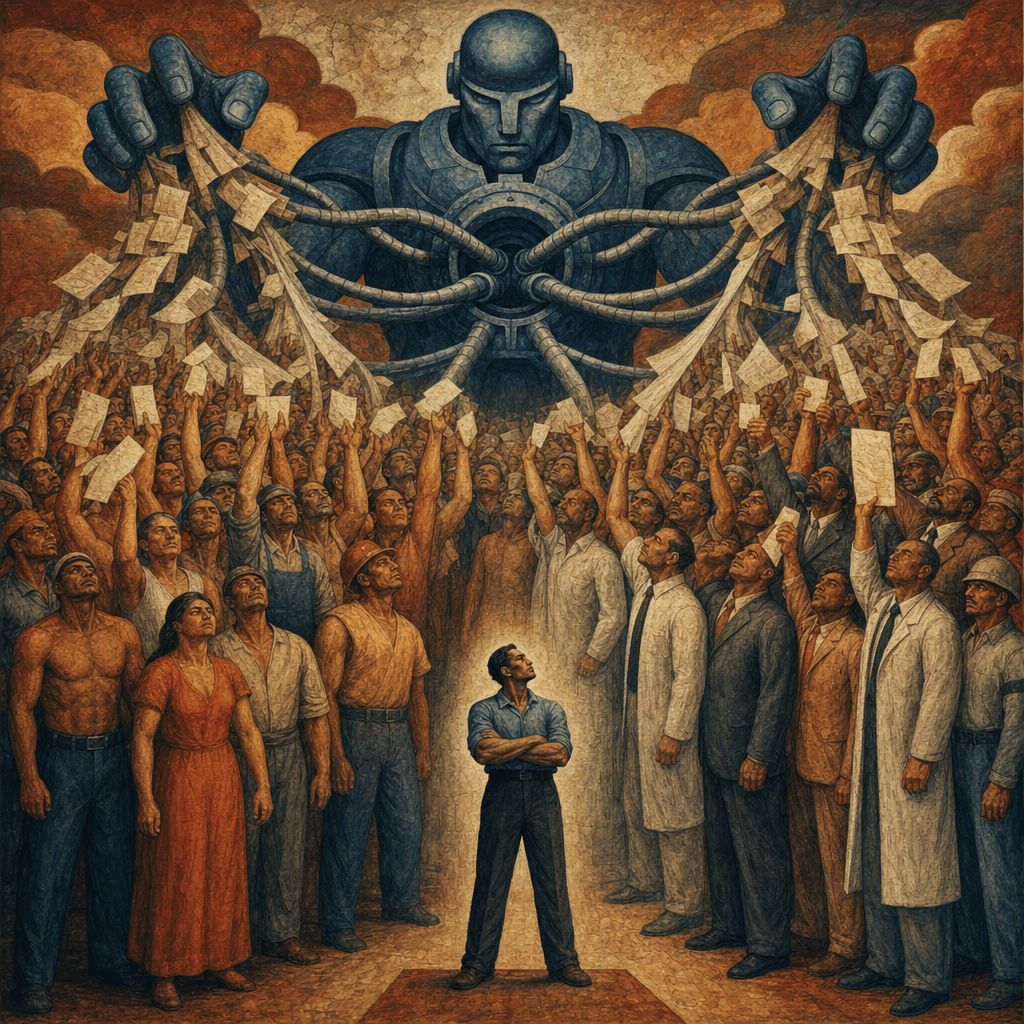
The number that should be on every board deck right now: only 3% of organizational leaders are prepared to steer AI adoption, according to HR Dive (2025-07-15). Not 30%. Not even 13%. Three. That figure isn't a skills gap — it's a structural failure, and the organizations that treat it as an L&D line item will pay for that misclassification within 18 months.
The instinct, almost universally, is to frame this as a training problem. Upskill the managers, run the workshops, add an AI literacy module to the next leadership offsite. That instinct is wrong, because the problem isn't that leaders don't understand AI tools. It's that the tools are quietly eroding the capabilities that give leadership its value in the first place.
What Is "AI Atrophy" and Why Should Executives Care?
AI atrophy is the gradual erosion of critical thinking, judgment, and problem-framing skills that occurs when knowledge workers consistently offload cognitive tasks to AI systems. The mechanism is straightforward: the brain, like any system under reduced load, deprioritizes pathways it no longer needs. Outsource your analysis often enough and the muscle weakens — not dramatically, but measurably, and cumulatively. Participants at the 2026 MIT Sloan CIO Symposium named this erosion of critical thinking as the defining organizational risk of accelerated AI integration — above security, above cost, above hallucination.
This matters because the skills being eroded are not commodities. They are the exact capabilities chief human resources officers (CHROs) and chief information officers (CIOs) insist they cannot hire fast enough: systems thinking, ambiguity tolerance, judgment under incomplete information. If AI adoption is systematically degrading those capacities in the workforce, then the efficiency gains on the surface are being purchased with long-term capability losses underneath. The strategic question isn't whether your teams are faster — it's whether they are becoming less capable of doing the work that AI cannot yet do.
Are AI Agents Actually Ready to Take on That Cognitive Load?
Here is where the hype collides with operational reality. Leaders at the 2026 MIT Sloan CIO Symposium reported a consistent gap between what agentic AI (AI systems that autonomously execute multi-step tasks within workflows, making decisions without human input at each step) promises and what it delivers in production. The demos are reliable. The agents, once embedded in real organizational complexity, are not.
O'Reilly Media (2025-06-30) documented this pattern in detail: organizations that mandated AI adoption across teams, procured enterprise-grade models, and put efficiency metrics in place saw early gains followed by compounding failure modes — cost overruns, cascading errors in autonomous pipelines, and a deepening dependency on systems that require expert human oversight to course-correct. The phrase "engineering for imperfection" is not a design philosophy. It is a retrospective admission that real agentic AI deployments are fragile in ways the procurement cycle never surfaced.
The implication is blunt: the humans in the loop need to be more capable, not less, as AI agents take on more workflow steps. Atrophy and agentic expansion are on a collision course inside most enterprises right now.
What Does a Leadership Readiness Response Actually Look Like?
The HR Dive leadership readiness data (2025-07-15) also surfaces something operationally useful: 47% of HR professionals believe HR leaders should own the strategy for how AI is used by employees, according to a Personnel Today survey. That's a meaningful shift — it implies the field is moving away from treating AI governance as an IT function and toward treating it as a human capability question. Whether organizations act on that instinct or just survey well about it is the operative distinction.
The readiness response that actually works is not a training program. It is a deliberate reassignment of where cognitive effort is expected. That means designing workflows where human judgment is not merely permitted but structurally required — where AI produces an output and a qualified human is accountable for interrogating it, not just approving it. The organizations at the MIT Sloan CIO Symposium (2026) that were managing atrophy most effectively were doing exactly this: treating human critical engagement with AI outputs as a non-negotiable workflow step, not an optional quality check.
If 97% of your leadership population is not ready to steer AI adoption, the answer is not to wait for readiness to arrive on its own. The question your board should be asking is not whether you have an AI strategy — it's whether the humans executing that strategy are becoming sharper or duller in the process.
Created with AI assistance. Editorial oversight: Juergen Ritzek. See our AI disclosure.