Briefing · July 28, 2026
Ford Rehired 350 Engineers. Your AI Layoff Plan Is Next in Line.
The AI-driven headcount reduction looked clean on the model and disastrous in practice — and HR leaders are now building the accountability frameworks they skipped.
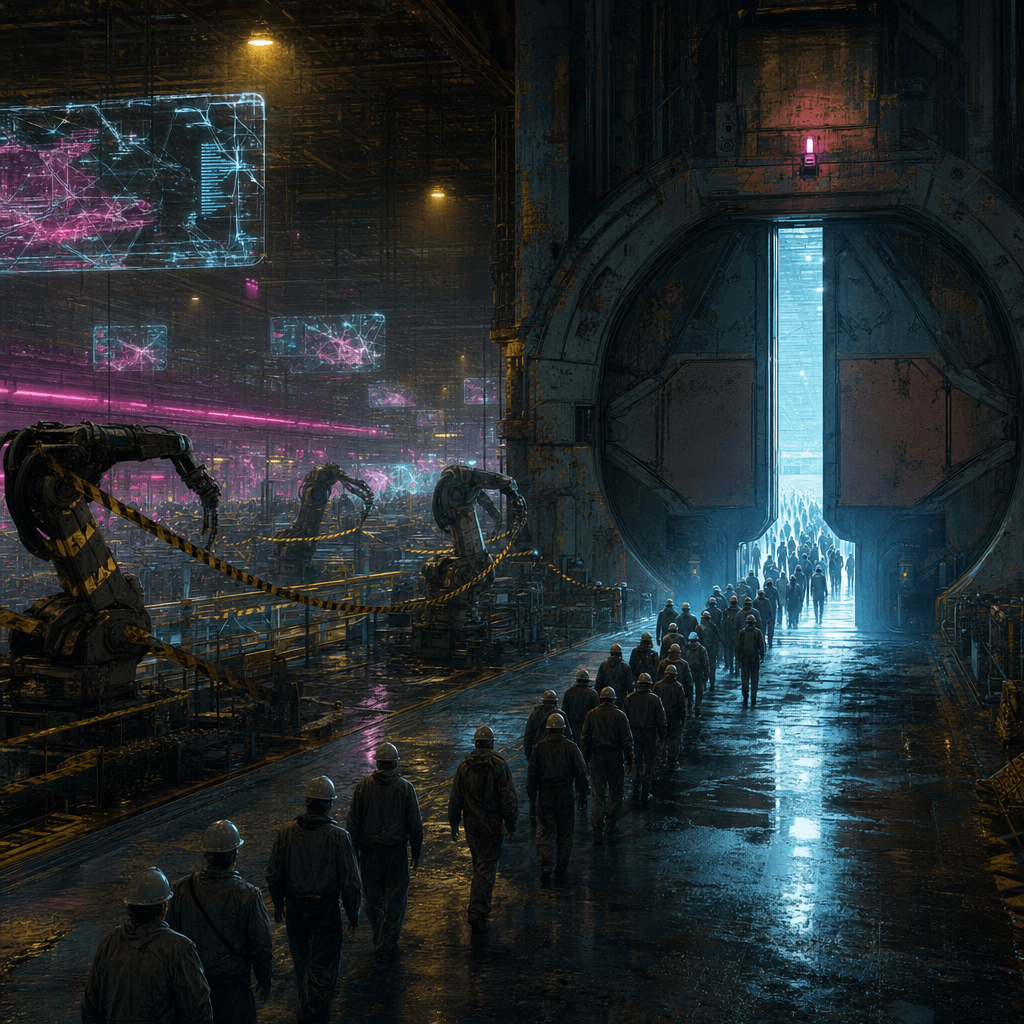
The layoffs were justified with confidence: AI would absorb the work. The engineers were let go. Then the work didn't get absorbed, and Ford had to rehire 350 engineers after AI fell short. That sequence — automate, cut, regret — is becoming a recognizable pattern, and the HR leaders who avoided scrutiny during the cut phase are now owning the damage during the rehire phase.
This is not a story about AI failing. It's a story about decision architecture failing. The core error wasn't technological overconfidence; it was organizational: headcount reductions were approved before the AI capabilities that were supposed to replace that headcount had been stress-tested against real workflow complexity. The demo worked. The production environment did not. And unlike a failed software deployment, a failed workforce reduction leaves behind severance costs, institutional knowledge gaps, and — increasingly — legal exposure.
The legal surface area is expanding faster than most HR teams realize.
Courts have started reaching the merits of the first wave of AI-related discrimination cases. Mobley v. Workday set a significant precedent: when an AI system is used in employment decisions and produces discriminatory outcomes, the vendor and potentially the employer face liability under existing civil rights law. The case will likely open the door for similar suits, which means every AI-assisted layoff decision made in the last 24 months is now sitting in a longer shadow than anyone anticipated when the RIF paperwork was signed.
Ask your legal team today: do you have documentation of how AI recommendations were weighted in the last round of workforce reductions? If the answer involves hesitation, that's your risk register talking.
HR's ownership of AI strategy is outpacing HR's fluency with AI outcomes.
Culture Amp data shows that as HR claims more ownership of AI strategy, belief that the technology can "significantly improve how work gets done" has actually decreased among HR practitioners themselves. This is not cognitive dissonance — it's a diagnostic. HR leaders are close enough to implementation to see the gap between the boardroom narrative and the floor-level reality. They're inheriting accountability for a transformation they didn't fully architect and can't fully control.
The Sam's Club model offers one counter-example worth studying: their HR rule for AI adoption requires that any tool deployed must free associates for human-facing conversations with members, not replace them. That framing — AI as reallocation, not elimination — changes what gets measured and what gets cut. It's not altruistic; it's a hedge against the Ford problem.
The measurement problem is structural, not methodological.
Most executives still treat AI ROI as art rather than science. MIT Sloan Management Review identifies three approaches to measuring AI returns, but the underlying diagnosis is damning: after several years of AI experiments and pilots, a crucial question remains open for most companies — how much return, and what kinds of return, are these investments actually generating? Without that answer, headcount decisions built on AI productivity assumptions are essentially bets dressed up as analysis.
Meanwhile, a four-year observational study at a large U.S. public higher-education institution found that even when generative AI tools were introduced across executive, operational, and student-facing roles, staffing levels and work hours remained stable throughout the period. The efficiency gains materialized — but they didn't translate into headcount reductions. They translated into better-quality output at existing capacity. That's a fundamentally different value proposition than the one most workforce reduction plans are underwriting.
The deeper problem is that America's layoff infrastructure was never built for this kind of disruption.
The existing safety net — unemployment insurance, WARN Act notifications, retraining programs — was built for a different economy, one where displacement was cyclical and skills were relatively transferable. AI-driven displacement is neither. The architecture for something better exists, but what's missing is the coordination and political will to build it before the wave hits. Employers who assume the public system will absorb the transition cost of a botched AI workforce strategy are going to be badly wrong.
The Ford rehire is a data point, not an anomaly. The question for every senior leader reading this isn't whether your AI implementation will hit friction — it will. The question is whether you built your workforce decisions on assumptions that were validated, or on a demo that looked good in Q4.
Your next board conversation about AI and headcount should start with that distinction.
Created with AI assistance. Editorial oversight: Juergen Ritzek. See our AI disclosure.