Briefing · October 23, 2026
AI Made Your Engineers Faster. Your Review Queue Is Now the Bottleneck.
AI agents flood code pipelines built for human-paced work — and the failure point isn't the code, it's everything downstream.
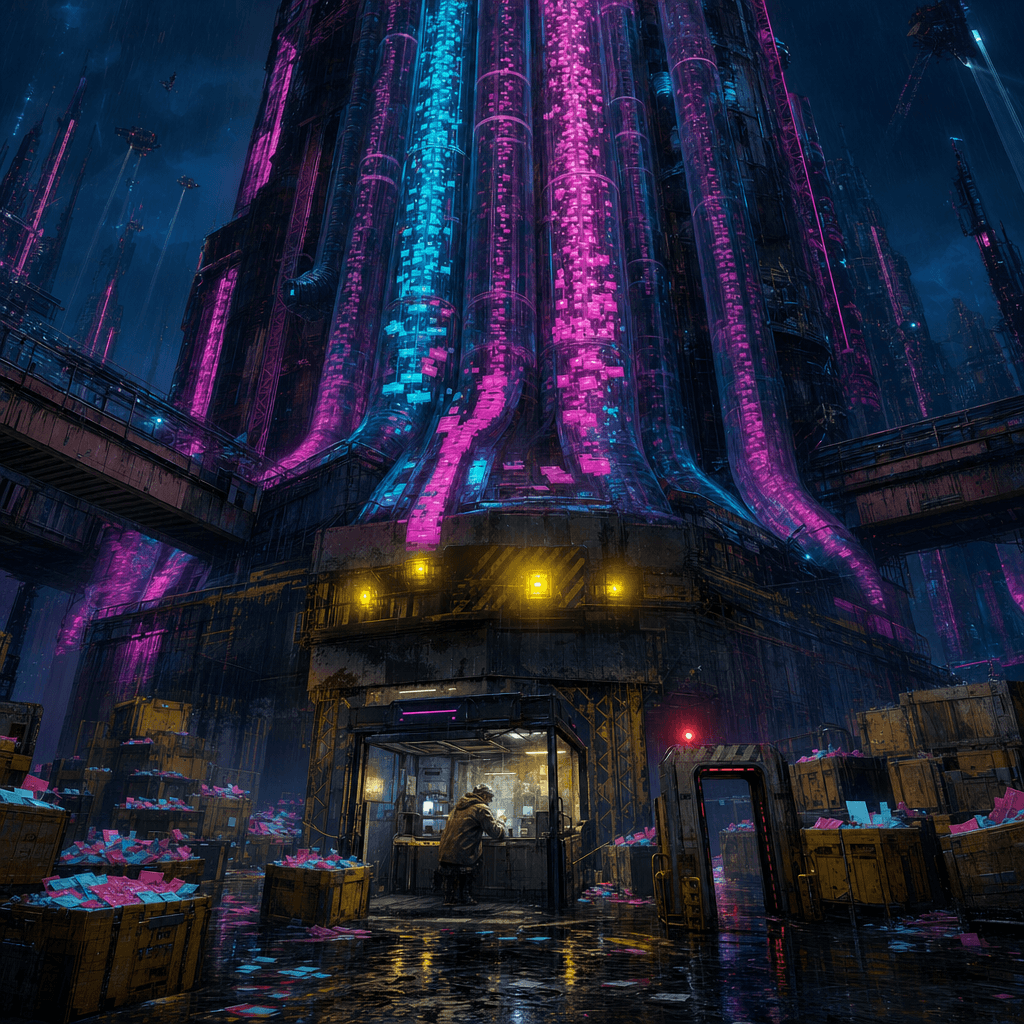
The productivity trap hiding inside your AI engineering rollout isn't where most chief technology officers (CTOs) are looking. It's not model quality, token costs, or agent hallucinations. It's the review queue. According to GitLab (2025-07-01), AI coding assistants are flooding pull-request pipelines that were architected around human-paced work — meaning the bottleneck has shifted entirely downstream, into review, security checks, and release approvals. AI-native engineering — the deliberate practice of designing software delivery processes so that human reviewers and autonomous agents each handle only what they are genuinely suited for — is the frame your engineering leadership needs before the next board conversation about AI productivity gains.
Does faster code generation actually accelerate delivery?
Not automatically — and that gap is where most organizations are quietly losing their AI investment. When a coding assistant doubles the rate of code written, it doesn't double the rate of code reviewed, tested, or shipped safely. It doubles the pressure on processes that were never designed for that volume. GitLab (2025-07-01) frames this explicitly: a coding assistant can accelerate writing, but it cannot reveal whether the downstream pipeline — review, security scanning, release gating — can absorb the new throughput. The implication is structural, not tactical. You can't solve a process-design failure with a better prompt.
The same dynamic surfaces in a parallel observation from O'Reilly Radar (2025-07-01): AI has materially changed how individual engineers write code, but it has not changed how teams coordinate, hand off work, or resolve conflicts at integration points. The collaboration layer — the human architecture of who reviews what, who owns the call on a contested change, who has context across the codebase — remains almost entirely untouched by AI tooling. Tools like GitHub Copilot and Claude models have been absorbed into individual workflows while the team-level operating model stays fixed at its pre-AI design. That gap, between individual productivity and collective delivery, is where timelines slip and technical debt accumulates invisibly.
What is AI-native engineering, and why does it differ from AI-assisted development?
AI-assisted development means individuals use AI tools inside an existing workflow. AI-native engineering (AINE) means the entire delivery process — who does what, at what pace, with what level of autonomy — is redesigned with agents as first-class participants. GitLab (2025-07-01) describes AINE as starting with bottleneck identification before any decision about agent autonomy: you must know where the pipeline stalls before you can decide how much independent action an agent should be permitted to take. The distinction matters because most organizations are still operating AI-assisted workflows inside AINE-sized ambitions — promising board-level velocity gains while leaving the delivery architecture unchanged.
This is not primarily a technology problem. MIT Sloan Management Review (2025-07-01) documents a pattern across failed digital initiatives where tools are adopted without redesigning the process they are meant to improve, and where managers attribute failures to user resistance rather than process-design gaps. The failure mode is nearly identical to what is now emerging in AI engineering rollouts: the tool works, the workflow doesn't, and the diagnosis lands on people.
There is an additional wrinkle that senior operations leaders should bring to their engineering counterparts. MIT Sloan Management Review (2025-07-01) finds that employee stress linked to digital-tool proliferation carried an estimated annual cost of up to 300 billion USD in high-income countries as of 2022 — and that cost compounds when new tooling is layered onto unreformed processes. Engineers navigating AI-generated code volumes with unchanged review norms are not a resilience story; they are a burnout pipeline.
The strategic question isn't whether AI agents should be part of your engineering organization. That ship has sailed. The question is whether your delivery process was designed for the throughput those agents now generate, or whether you have built a 2025-era production machine on a 2019-era runway. Boards are asking for AI productivity metrics. The honest answer, for most organizations, is that they are measuring output at the generation layer and ignoring the queue that sits between generation and value. Before your next review-cycle conversation, ask your engineering leadership one question: at current agent utilization rates, what is the average age of a pull request waiting for human review? That number will tell you everything about whether your AI investment is actually landing.
Created with AI assistance. Editorial oversight: Juergen Ritzek. See our AI disclosure.